Turning real-world data into sound evidence
For more than 25 years I've designed studies, built models and analysed messy field data, from insects in the rainforest canopy to loans for smallholder farmers in Papua New Guinea.
I work across statistics, modelling and data systems, with more than 20 years' experience using R and extensive experience with C++ and large simulations on computer clusters.
The interesting part isn't simply getting data. It's working out what the data actually tells you, and what it doesn't.
What I do
Statistical modelling
Linear and generalised linear models, mixed models, GAMs, distribution fitting, power analysis, and parametric and non-parametric tests.
Multivariate analysis & machine learning
PCA, correspondence analysis, LDA, CCA, classification and cluster analysis.
Time-series & spatial analysis
Finding trends, patterns and dependence in data collected over time and across landscapes.
Simulation & mathematical modelling
Stochastic models based on probability theory and random processes, including large simulations written in C++ and run on computer clusters.
Data systems
Designing how data is collected, cleaned, validated and linked between systems so that it can be trusted and used.
Statistical review
I designed and taught Advanced Stats with R for master's students at York, and scientific journals regularly ask me to review the statistics in submitted papers.
Selected work
Mapping farms and checking EUDR compliance
Mapping smallholder farms in Papua New Guinea to establish where farmers are and whether their farms comply with the EU Deforestation Regulation. This work has involved university research, Field Buzz, Kamapim and Koltiva, and work for NuraTerra through Amaterra Ltd.
Credit scoring for smallholder farmers
I designed the data system and app integration for a GSMA AgriTech rural-loan pilot with MiBank and Field Buzz. The system enabled loans to be approved and paid automatically through the bank's system. I worked with the credit scorer to establish which farmer data predicted repayment. The project explored how data could give smallholder farmers an economic identity and improve access to financial services.
How farmers respond to training
I worked with Kamapim in Papua New Guinea to analyse how smallholder farmers responded to training.
Modelling biodiversity
At the École Normale Supérieure in Paris, I built stochastic models of speciation and extinction over millions of years, using C++ for large simulations and R for analysis. The first two years were funded by a Marie Curie Intra-European Fellowship (EU grant 629825, MEDIATEMP: Is there a limit to biotic diversification? Insights from stochastic models of speciation and extinction). I published the results as first author in Philosophical Transactions of the Royal Society B (2016).
Predicting virus-host relationships
I co-authored research, published in Molecular Ecology (2012), examining how viruses switch between hosts. By comparing virus and host family trees, we found that geography explained patterns of relatedness better than the hosts' own evolutionary relationships. The model predicted a new virus in a rodent host in a new location, and that virus was subsequently found there.
Rainforest biodiversity
I carried out the statistical analysis for a major international study of insect and spider diversity in tropical forest, published in Science (2012), of which I am a co-author. The team sampled 6,144 arthropod species from less than half a hectare of rainforest in Panama, and estimated that the 6,000-hectare reserve holds around 25,000 species.
Sampling design for biodiversity monitoring
As first author, I measured how much the choice of sampling method, compared with the type of habitat, affects what a survey actually catches. The analysis covered around 400,000 individuals from 1,682 species groups, sampled with four methods across forests at different stages of recovery in Gabon.
Vanilla standards and export
I co-wrote two United Nations documents for Papua New Guinea's vanilla sector, which were subsequently adopted as national standards.
Published work
Reports and papers you can read for yourself. My full publication list is on Google Scholar: more than 1,600 citations, h-index 11. My ORCID iD is 0000-0002-4330-5192.
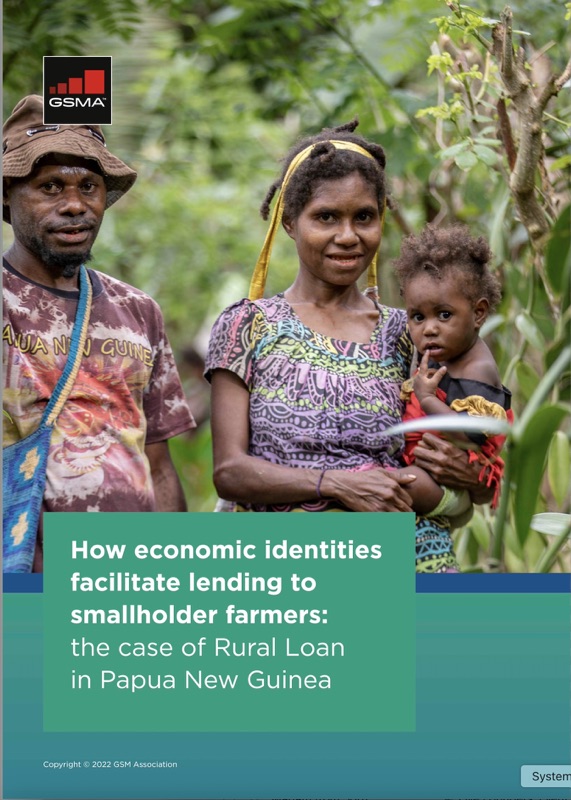
GSMA, 2022
How economic identities facilitate lending to smallholder farmers: the case of Rural Loan in Papua New Guinea
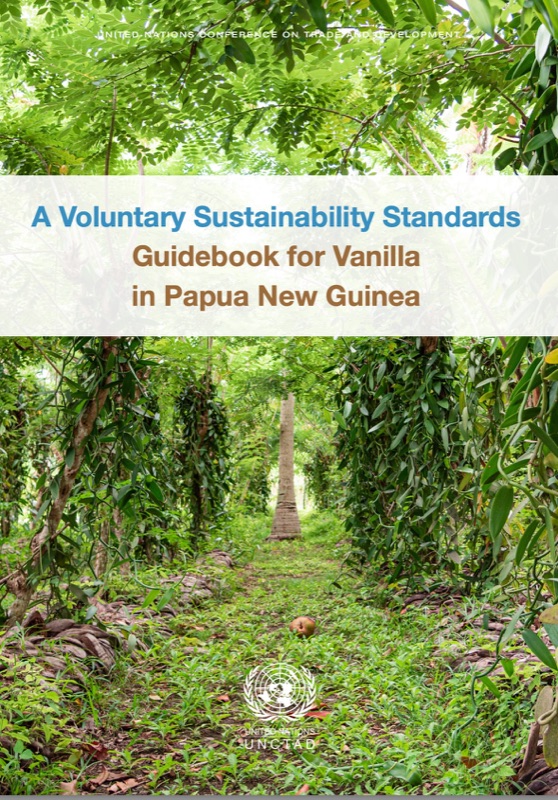
UNCTAD, 2023
A Voluntary Sustainability Standards Guidebook for Vanilla in Papua New Guinea, and the Papua New Guinea Vanilla Export Guide
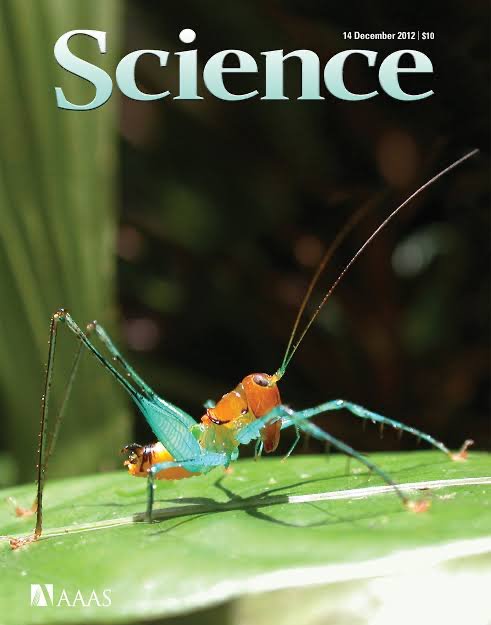
Science, 14 December 2012
Arthropod diversity in a tropical forest. Co-author; I carried out the statistical analysis.
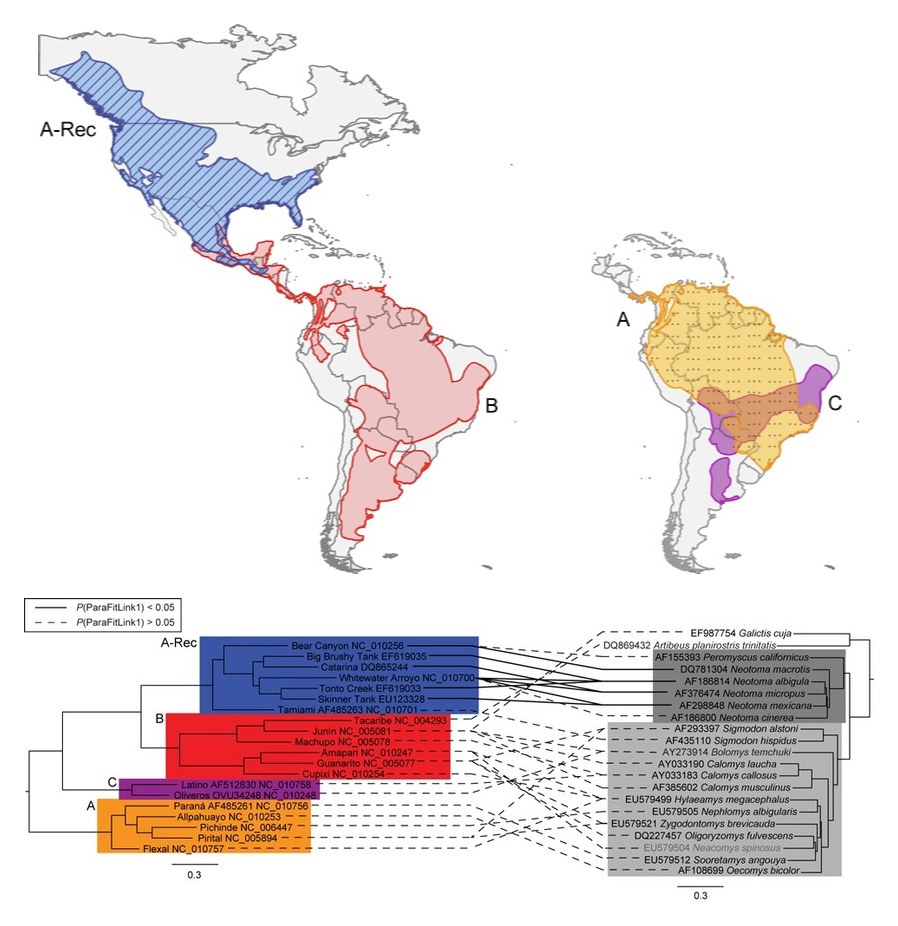
Molecular Ecology, 2012
Complex patterns of host switching in New World arenaviruses. Co-author.
The common thread
The subject changes.
The methods change.
The datasets change.
But the question stays remarkably similar:
What can we actually conclude from the evidence?